Designing for Wellbeing: How Architecture Can Support Mental Health

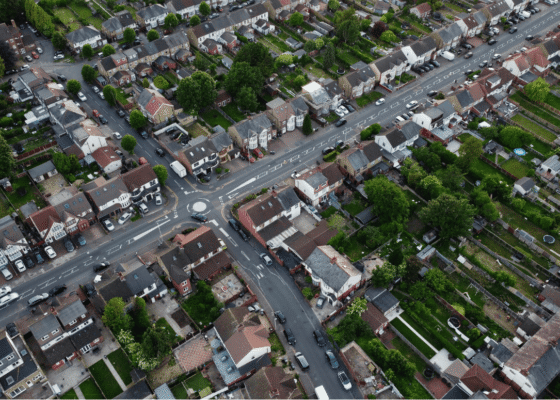
Mental health is frequently framed as something internal – shaped by lifestyle, work or personal circumstance. Increasingly however, research points to another powerful influence: the built environment.
The spaces we inhabit every day don’t just accommodate us, they shape us. Whether that’s a workplace, school or care setting, our surroundings can have a massive impact on how we behave and how we connect with others.
Here we look at four LEP projects that show how thoughtful design can make a measurable difference on mental health and wellbeing
Connecting people to nature and daylight
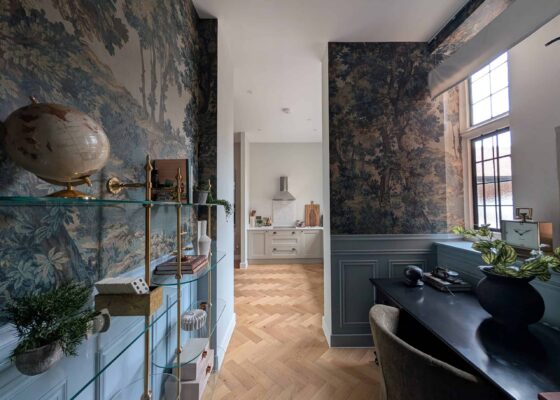
Access to natural light and the presence of nature are consistently proven contributors to improved mental wellbeing. Daylight supports circadian rhythms, improving sleep, mood and cognitive performance, while views of nature are shown to reduce stress and mental fatigue.
This principle is clearly demonstrated at Spring Lane Campus Canterbury, for East Kent College Group. Designed as a specialist learning environment for horticulture and animal care, the campus maximises daylight, natural ventilation and biodiversity through green roofs and landscaped surroundings.
Crucially, the design goes beyond simply adding green features. It creates a seamless relationship between indoor and outdoor learning, embedding nature into the everyday experience. This connection to nature not only appeals to the interest of that specific group of students, but helps foster calm, focus and engagement – particularly important in educational environments where attention and wellbeing are closely linked.

Designing for psychological safety
People feel most comfortable in environments that balance openness with enclosure. Spaces that are too exposed can feel overwhelming, while overly enclosed environments can feel restrictive.
With Orchard School Dining Hall in Canterbury, this balance was central to the redesign of a dining and assembly space for pupils particularly given its SEN status.
Rather than a single uniform space, the design introduces a variety of seating arrangements and spatial conditions. Open, communal areas support social interaction, while smaller tables and quieter zones provide a sense of refuge for those who need it.
This layered approach allows users to regulate their own experience – choosing when to engage and when to step back. In environments supporting vulnerable users, that sense of control is not just beneficial, but essential.
Reducing cognitive load through clear design
Not all stress is visible. Confusing layouts, monotonous corridors and visually repetitive environments can subtly increase cognitive load, making spaces harder to navigate and more mentally draining.
At Broadmeadow Care Home Folkestone, LEP addressed this through careful spatial planning and variation. The building is organised into smaller, domestic-scale clusters rather than a single institutional block, helping residents feel more oriented and at ease.
Circulation routes are designed with variation and visual cues, introducing moments of interest that break up monotony and aid wayfinding. This reduces disorientation – particularly important in care environments – and creates a more engaging, less stressful experience overall.
Designing for connection, community and belonging
Mental wellbeing is closely tied to our sense of belonging. Spaces that encourage interaction, visibility and shared use can strengthen social connections and foster a sense of community.
This principle is central to Alkerden Education Campus in Ebbsfleet, a large-scale development designed to serve as both an educational facility and a civic anchor within a growing community.
The campus is organised along a central spine that connects primary and secondary schools with sports facilities and the wider neighbourhood, encouraging movement, interaction and shared use. Importantly, the design integrates community-accessible amenities, including a dual-use sports centre capable of supporting hundreds of users at a time, reinforcing the campus as a social hub. This is simultaneously supported by a discreet, well-integrated security approach that protects students, without restricting connection
The scheme also prioritises environmental comfort – maximising daylight, natural ventilation and air quality – while using materials and construction methods that reduce harmful emissions. By combining physical connectivity with environmental quality, the campus creates a place that supports not just learning, but community wellbeing on a broader scale.
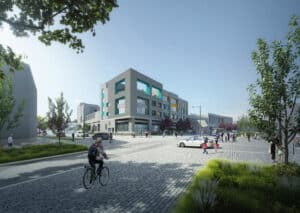
Across these projects, a consistent theme emerges: wellbeing is not the result of a single feature, but of a holistic approach.
At LEP, this means designing environments that are intuitive, flexible and respond to human needs – whether that’s a care home that feels domestic rather than institutional, a school that supports emotional regulation, or a campus that becomes a focal point for community life.
Importantly, these principles are not limited to healthcare or specialist settings. They apply equally to workplaces, schools and public spaces. As conversations around mental health continue to evolve, architecture has a growing role to play. The challenge – and opportunity – is to move beyond compliance and efficiency, and towards environments that actively support how people think, feel and function.
Because when we design with people in mind, we don’t just create better buildings – we create places where people can truly thrive.